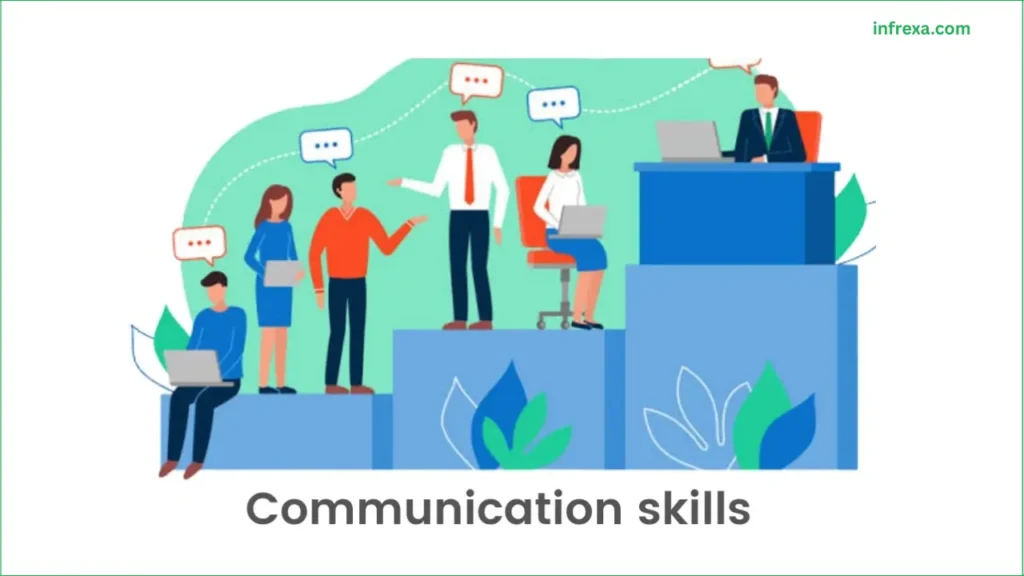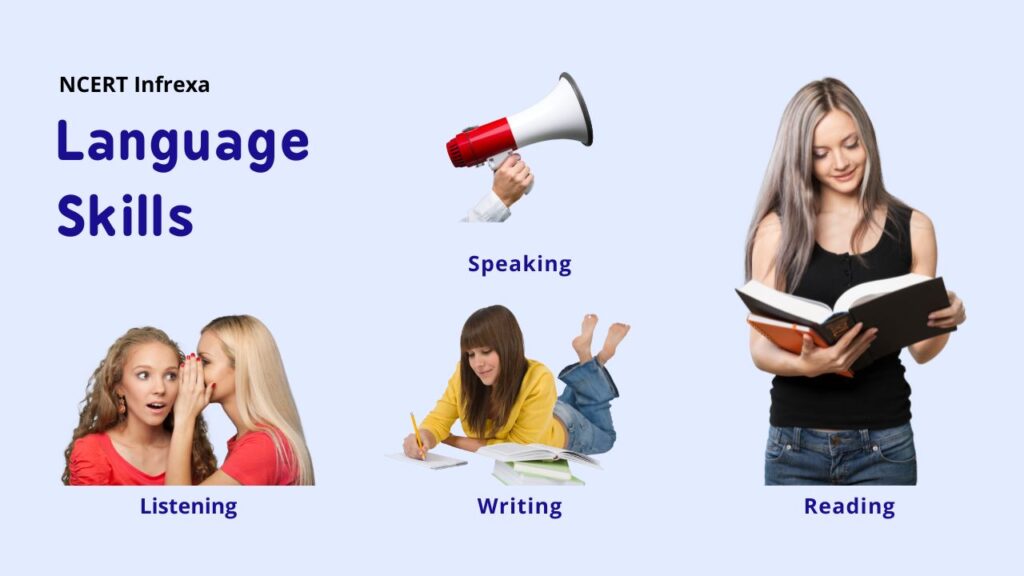
Language skills refer to the abilities that allow us to communicate effectively. These include four core competencies: listening, speaking, reading, and writing – key competencies that are essential for expressing ideas and understanding others.
Academic Classification: Receptive vs. Productive Skills
Academically, these skills are categorized based on whether you are receiving or producing language:
- Receptive Skills (Input): Listening and Reading – These involve absorbing and interpreting language input.
- Productive Skills (Output): Speaking and Writing. These involve generating meaningful language output (creation and delivery of meaningful communication).
Effective language learning occurs when both types work in harmony – receptive input refines productive output, leading to fluency, accuracy, and comprehension
Importance of Proficiency in Language Skills
Achieving proficiency in these four areas is crucial for effective communication. Without a deliberate, balanced development plan in each skill, learners may struggle to convey their thoughts clearly or accurately interpret others. Teachers play a significant role in helping students develop these abilities to ensure they can engage fully in both personal and professional contexts.
In a multilingual country like ours, language is not just a medium for communication but also a tool for education, administration, trade, tourism, and employment. This multifaceted role means proficiency is often a prerequisite for economic mobility and leadership.
The Role of Language Skills in Personal Development
Each of the four language skills – listening, speaking, reading, and writing – contributes to an individual’s overall development. These skills are foundational for communicating effectively in society, whether by articulating ideas or by interpreting what others are saying or writing.
Language education aims to improve these skills, recognizing their importance in shaping well-rounded individuals. As an educator, I’ve found that developing these skills directly correlates with improved critical thinking and emotional intelligence, as students learn to process nuanced arguments and articulate complex feelings.
The Four Types of Language Skills
These key skills are typically developed in a sequential, but interconnected, order.
1. Listening Skills
Listening is more than just hearing words; it involves understanding and interpreting the information. It is the first language skill we develop and is crucial for learning other skills. For instance, a child learning a new language begins by listening to sounds and words, eventually grasping their meanings.
Example: A teacher giving a lecture, and students absorbing the content to understand the subject, is an example of listening skills in action. A more advanced example is a professional interpreting the subtext and non-verbal cues in a negotiation.
Developing strong listening skills is essential as it forms the foundation for effective communication. Without good listening, other skills like speaking and reading can suffer. For educators, incorporating activities to develop linguistic skills, such as attentive listening exercises, is vital for student success. In my 10 years of teaching, I’ve found that the most effective way to build listening skills is to move students beyond passive listening to active, inferential listening, where they analyze the speaker’s intent, not just the words.
Key Sub-Skills – Listening
| Sub-Skill | Purpose | Example Exercise |
|---|---|---|
| Intensive Listening | To focus on detailed information, grammar, and pronunciation. | Transcribing short audio clips verbatim. |
| Extensive Listening | To grasp the overall message, tone, and main idea without focusing on every word. | Listening to a podcast or documentary for leisure. |
| Inferential Listening | To understand unspoken context, emotion, or the speaker’s implied intent. | Analyzing dialogue in a film for tone (sarcasm, frustration, etc.). |
High-Impact Development Activities – Listening
- TED Talk Summarization: Listen to a 10-minute TED Talk once, then write a three-sentence summary of the main argument. This forces you to focus on the core message, not the details.
- Shadowing: Listen to a native speaker (e.g., in a news clip) and simultaneously repeat exactly what they say. This improves acoustic memory and natural speech rhythm.
2. Speaking Skills
Speaking is the ability to express thoughts, ideas, and emotions verbally. It requires not only knowledge of the language but also confidence and clarity. Speaking is often used in conjunction with listening, as effective communication involves both delivering and receiving messages.
Example: In a classroom debate, students use speaking skills to present arguments and counterarguments effectively. This also involves managing hesitation and using appropriate transitional phrases to maintain momentum.
Speaking skills are essential for interpersonal communication, public speaking, and professional interactions. For language educators, teaching language skills in English often involves real-life classroom activities like role-playing and presentations to boost speaking confidence and overcome hesitation, which is a more common obstacle than grammar errors.
One common mistake I see is focusing too much on vocabulary and ignoring fluency. Fluency – the ability to keep talking smoothly – is often more critical for real-world confidence than perfect grammar.
Key Sub-Skills – Speaking
| Sub-Skill | Purpose | Example Exercise |
|---|---|---|
| Fluency | The smooth flow of speech without excessive pausing, ensuring clear delivery. | Timed speaking drills (e.g., speak on a topic for 60 seconds non-stop). |
| Accuracy | Correct use of grammar, syntax, and vocabulary. | Participating in peer correction or formal debates. |
| Pronunciation & Intonation | Clear articulation of sounds and using vocal tone to convey meaning. | Recording and comparing your speech to a model speaker. |
High-Impact Development Activities – Speaking
- “One-Minute Expert” Drill: Choose a random subject (e.g., coffee, traffic lights, deep-sea exploration) and explain it clearly to a listener for one full minute without repeating yourself or using filler words.
- Role-Playing Complex Scenarios: Move beyond simple greetings. Practice realistic professional scenarios like negotiating a contract, giving constructive criticism, or making a formal complaint.
3. Reading Skills (Receptive & Written)
Reading is the ability to interpret written language, symbols, and texts. This skill is crucial for acquiring knowledge and understanding complex concepts. Reading skills include the ability to comprehend and analyze what is read, making it a vital part of learning.
Example: Reading a textbook to understand a historical event involves decoding the text and grasping the underlying ideas. This process involves specialized sub-skills like skimming for general orientation and scanning for specific data points.
Reading skills are important for academic success and lifelong learning. Effective reading enables students to engage with a wide range of materials, from textbooks to literature. To support this development, educators can use resources such as listening, speaking, reading, writing skills PDFs, and language skills B.Ed notes, which provide structured materials and exercises to enhance reading abilities. My advice for lifelong learners is to prioritize critical reading – don’t just absorb the information, question the author’s bias and evidence.
Effective readers question what they read – they look for assumptions, logic, and evidence. This habit transforms passive reading into active learning.
Key Sub-Skills – Reading
| Sub-Skill | Purpose | Example Exercise |
|---|---|---|
| Skimming | Reading rapidly to get the general idea or gist of a text. | Quickly scanning newspaper articles for headlines and topic sentences. |
| Scanning | Reading quickly to locate specific information (e.g., a date, a name, a percentage). | Looking up a fact in a textbook or finding a specific price on a menu. |
| Critical Reading | Analyzing the text’s argument, identifying bias, and evaluating the evidence presented. | Writing a critique of a non-fiction article or editorial piece. |
High-Impact Development Activities – Reading
- The SQ3R Method: A highly effective study strategy: Survey (read headers), Question (turn headers into questions), Read (actively), Recite (summarize verbally), Review (check notes).
- Reading Widely, Not Deeply (at first): Read texts far outside your comfort zone (e.g., science journals, legal documents) to build familiarity with diverse specialized vocabularies and sentence structures.
4. Writing Skills (Productive & Written)
Writing involves creating text to communicate ideas, thoughts, and information. It requires a good grasp of grammar, vocabulary, and structure. Writing is often used to convey information clearly and concisely, making it an essential skill in academic and professional settings.
Example: Writing an essay on the importance of language skills requires organizing thoughts and presenting them logically. The ultimate goal is cohesion: ensuring all sentences and paragraphs link smoothly to form a single, unified message.
Writing skills are crucial for academic assignments, professional communication, and creative expression. They also complement reading skills, as good readers often develop into good writers. A persistent challenge is maintaining consistency in register (formal vs. informal tone) and coherence. Always imagine your reader is following a logical map laid out by your sentences.
Key Sub-Skills – Writing
| Sub-Skill | Purpose | Example Exercise |
|---|---|---|
| Cohesion & Coherence | Ensuring ideas flow logically and are connected by transition words and phrases. | Highlighting all transition words in an essay and rewriting them using synonyms. |
| Register & Tone | Adjusting the writing style (formal, informal, persuasive, descriptive) to the audience and purpose. | Rewriting a casual email as a formal business letter. |
| Grammatical Accuracy | Correct usage of punctuation, tenses, and sentence structure. | Using grammar checking tools and focusing on fixing one common error per week. |
High-Impact Development Activities – Writing
- Journaling with Constraints: Write a daily journal entry, but impose a specific constraint (e.g., “Must use three passive sentences,” or “Must use only sensory details”). This challenges your structural versatility.
- Reverse Outlining: After writing an essay or report, create an outline from the finished product. This reveals weaknesses in your logic and paragraph structure, forcing you to focus on clear organization.
Methods to Develop Language Skills
The most effective development happens when skills are practiced in an integrated way (e.g., listening to a presentation and then writing a summary).
- Listening: Encourage active listening by engaging in discussions and responding thoughtfully. (See Intensive/Extensive Listening Table).
- Speaking: Practice speaking in different scenarios, such as storytelling or debates, to build confidence and fluency. (See Shadowing Technique).
- Reading: Develop reading habits that include a variety of texts to improve comprehension and vocabulary. (See SQ3R Method).
- Writing: Focus on clear and concise writing. Regular practice, such as journaling or essay writing, can enhance this skill. (See Reverse Outlining).
Related: Communication Skills: Definition, Types, and Examples
Common Issues and Solutions
| Skill | Common Issue/Pitfall | Solution |
|---|---|---|
| Listening | Pseudo-Listening (pretending to listen). | Use confirmation techniques like paraphrasing what the speaker said before responding. |
| Speaking | Internal Translation (translating from native language first). | Practice “Thinking in English” or the target language through inner monologue and rapid response drills. |
| Reading | Regression (Re-reading lines unnecessarily, breaking flow). | Use a finger or pen to guide your eye quickly across the text to maintain forward momentum. |
| Writing | Lack of Cohesion (Ideas jumping without transition). | Dedicate 10 minutes of editing solely to adding transition words (however, moreover, consequently) between ideas. |
Downloadable Resource
Download the complete “Listening, Speaking, Reading, Writing Skills” PDF (34 pages, 816 KB) – includes guided activities, practical examples, and worksheets for teachers and learners.
File Details:
- Type: PDF
- Author: Prabhu Singh
- Language: English
- License: Free Educational Resource
- Availability: Available to download ✅
Conclusion
Language skills are the backbone of communication, learning, and cultural exchange. Strengthening listening, speaking, reading, and writing empowers individuals to express ideas clearly, understand others deeply, and connect meaningfully with society.
Whether you are an educator, student, or lifelong learner, consistent practice across all four skills will refine your communication abilities and open new opportunities for growth – both personal and professional.
References
- UNESCO – “Languages matter: global guidance on multilingual education” (2025).
- Cambridge English – “The Cambridge English Scale explained” (PDF detailing communicative competence/language assessment).
- NCERT (India) – “Learning Outcomes for English – Secondary Stage” (December 2020).
- U.S. – Office of English Language Acquisition (a division of the U.S. Department of Education).
- India – Ministry of Education, Government of India.