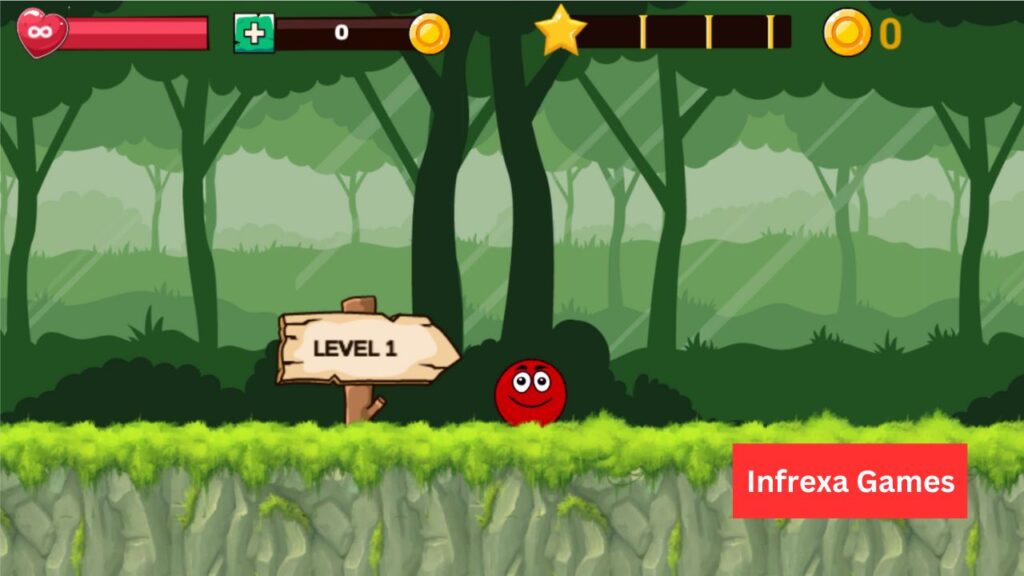
Red Ball 6 is a physics-based platform game developed by FUN GENERATION LIMITED. It is the sixth entry in the Red Ball series and follows similar gameplay mechanics to Red Ball 4, introducing new levels, enemies, and environmental challenges.
The game continues the series’ tradition of minimalist design and skill-based movement while integrating more advanced physics simulation and dynamic level layouts. It emphasizes timing, observation, and coordination rather than upgrades or power-ups, maintaining the series’ classic platforming identity.
| Developer | FUN GENERATION LIMITED |
| Genre | 2D Platformer / Physics-based Puzzle |
| Age Rating | 4+ |
| Mode | Single-player |
| Online Play | Click to play |
| Platform | Android, iOS (Mobile), Computer Web browsers |
Gameplay
The player controls a red spherical character with two eyes that rotate automatically and blink at intervals. The movement mechanics remain consistent with earlier titles: players roll, jump, and use environmental objects to progress through each stage.
The game contains over 60 levels, which are unlocked sequentially. Each level awards up to three stars, based on the player’s completion time, avoidance of hazards, and overall performance.
Levels gradually increase in complexity, combining moving platforms, narrow ledges, and timed jumps. The absence of checkpoints in most levels heightens the importance of consistent control and situational awareness.
Keyboard Control Keys
- Left/Right Arrow: To move horizontally (backward or forward)
- UP Arrow: To jump
Physics and Movement
The ball possesses realistic momentum and does not stop immediately after moving. This feature requires careful control, especially on narrow platforms or sequences of floating pillar platforms across rivers. Approaching these areas at high speed may cause the ball to overshoot and fall into the water, resulting in instant failure.
Players frequently use environmental elements such as wooden blocks and sticks to overcome gaps and obstacles. Wooden blocks are pushed to reach higher platforms, while sticks are used to form temporary bridges or protective barriers against ground-level spikes. In some cases, moving or sliding sticks are necessary to cross large horizontal gaps. Certain sections include rotating wooden propellers, which require precise timing to synchronize jumps and landings with their movement.
This momentum-based control system is one of the game’s defining mechanics and reflects a realistic physics model uncommon in traditional 2D platformers.
Enemies and Hazards
The game features multiple enemy types that vary in behavior and lethality. Some of them are:
- Non-lethal squares – Some black square enemies disappear harmlessly upon contact.
- Lethal squares – Visually similar black squares cause instant destruction on contact. After level 30, many of these enemies begin to move aggressively toward the player’s ball.
- Giant black balls – Larger, aggressive enemies with teeth and large eyes. They drain the player’s health on contact and can push the player off platforms. After two to three hits, the player’s health depletes completely.
- Bosses – Boss enemies appear after level 10 and become more frequent after level 40. Defeating them is required to complete certain levels.
In addition to enemy threats, falling into water or touching sharp spikes results in immediate loss. Certain hazards require the player to anticipate movement patterns rather than react impulsively, contributing to the game’s difficulty curve.
Progression and Difficulty
The player cannot upgrade or modify the red ball; advancement depends solely on skill and understanding of movement physics. Later levels require precise timing, environmental awareness, and memorization of enemy patterns.
This design reinforces a skill-based progression system, where success is determined entirely by player mastery rather than character enhancement. As a result, replaying earlier stages often improves precision and speed in later challenges.
Actionable Strategies
Having completed all 60 levels of Red Ball 4 and extensively tested Red Ball 6, several practical strategies emerge from direct gameplay:
- Avoid holding the movement key continuously; short taps maintain control on narrow platforms.
- Before crossing rivers or spike traps, push or slide wooden sticks into stable positions. Once placed, they can double as both bridges and shields.
- Especially in later levels, pause momentarily to watch enemy motion cycles and propeller rotations. Reacting early can cause unnecessary falls.
- When jumping across floating narrow pillar platforms, use a sudden stop. High velocity increases the chance of slipping off due to delayed friction stop.
- For giant black ball bosses, approach them after baiting their forward rush. Jumping on them after their attack cooldown causes consistent damage.
- In areas with rivers followed immediately by spikes, use a stick to form both a bridge and a cover. Push it gently to avoid flipping.
These patterns, derived from my real gameplay, indicate that patience and timing are more rewarding than quick reflexes.
Comparison with Previous Installments
Compared with Red Ball 4, Red Ball 6 features improved graphics, smoother animations, and more complex enemy behaviors. Obstacles and hazards are arranged in new, less predictable patterns, increasing the overall difficulty and replay value.
The inclusion of reactive environmental mechanics – such as sliding sticks and rotating propellers – demonstrates a significant step toward physics realism, aligning Red Ball 6 more closely with modern puzzle-platformers.
Key Features Summary
| Feature | Description |
|---|---|
| Total Levels | 60+ sequentially unlocked stages |
| Objective | Complete each level and earn up to 3 stars |
| Physics | Realistic momentum-based movement |
| Hazards | Rivers, spikes, propellers, moving platforms |
| Enemies | Non-lethal squares, lethal squares, giant black balls, bosses |
| Progression | 100% skill-based; no upgrades or customization |
| Visuals | Enhanced graphics and smoother animations |
| Difficulty | Gradually increases with unpredictable obstacles |
Expert Insights
Having completed all levels of Red Ball 4 and tested Red Ball 6, players have observed that the latter introduces more aggressive enemy AI, tighter jump timing, and increased reliance on momentum control. Unlike typical arcade platformers, Red Ball 6 rewards mechanical consistency rather than rapid reflexes, creating a more calculated gameplay rhythm.
This consistent, physics-driven gameplay has earned positive feedback from longtime fans who prefer mechanical precision over cosmetic rewards.