Matching games are a broad category of puzzle games that center on the alignment or grouping of identical items to clear them from a board. The most popular subgenres include Match-3 (swapping items), Pair Matching (finding identical partners), and Projection Matching (firing items to connect with others).
Here is a list of the top 10 free-to-play matching games available on the internet, detailing their core mechanics and unique challenges.
1. Bejeweled (Classic Match-3)
Bejeweled established the modern Match-3 genre, focusing purely on high scores and satisfying chain reactions. The game requires players to swap adjacent tiles to create a line of three or more identical gems, clearing them from the board. Strategic depth comes from managing the board to maximize special gems and cascades (multiple, chained matches).
Pro Tip: Focus on making matches low down on the board. Cascades (secondary matches from falling gems) are more likely to occur and grant higher scores when matches start at the bottom, creating subsequent chain reactions.
The game is available on PC, Console, and Mobile. You can find it on the Play Store or App Store. A key alternative for players who prefer a faster, competitive, and sometimes time-limited pace is Gem Swap.
2. Candy Crush Saga (Objective-Based Match-3)
While Candy Crush Saga uses match-three mechanics similar to Bejeweled, it differs by introducing level-based objectives and constrained move counts. The core mechanic is to complete specific tasks, such as clearing jelly or bringing down ingredients, within a limited number of moves. This approach requires efficient problem-solving and planning for special candy creation rather than relying on high-score luck.
Pro Tip: Avoid making a match near the bottom if the same match can be made higher up and you need a special candy. Making a match higher up allows for more potential cascades, which increases the chance of a Color Bomb forming from subsequent drops. Matches of four or five candies, or L/T shapes, create Special Candies (striped, wrapped, color bombs).
The game is available on Mobile and Web. You can play it via Facebook Gaming. For a similar experience focused on collecting items instead of candy, try Farm Heroes Saga.
3. Mahjong Solitaire (Pair Matching)
Mahjong Solitaire is a classic pair-matching game that relies heavily on pattern recognition and spatial reasoning. The goal is to clear a stacked layout of tiles by matching identical, unblocked pairs. A tile is considered “unblocked” only if it has no tiles resting on it (not blocked by any other tile on top) and is open on either its left or right side. This makes it best for long, contemplative sessions where focused attention is required. Common layouts, such as the Turtle formation, require careful removal planning.
4. Bubble Shooter (Projection Matching)
These games are defined by speed and physics. In Bubble Shooter, players use a cannon to shoot a colored bubble at a cluster of other bubbles. The projectile must connect with two or more bubbles of the same color to make the group clear and fall.
Success depends on aiming and color strategy. Bubbles that are disconnected from the top of the screen by a cleared group will collapse and earn bonus points. The ceiling lowers incrementally, adding time pressure. Jewel Academy also uses a fast-paced match-three format. Both are effective for situations where you only have a few minutes and want a quick dose of satisfaction. The gameplay involves accurate aiming and quick color matching while managing a descending board or a timer.
5. Jewel Quest (Board Transformation Match-3)
In this game, players swap adjacent jewels to form matches. However, the true objective is to turn the entire board to gold by making a match on every square. This adds a significant layer of strategy not found in pure scoring Match-3 games. Players must actively seek matches in difficult-to-reach corners and edges, often having to make repeated matches on the same squares to achieve the gold transformation.
6. Zuma / Marble Shooter (Chain Matching)
A stationary or moving launcher shoots colored spheres into a continuously moving chain of spheres traveling along a track toward a central goal. The goal is to match three or more spheres of the same color to eliminate them and shorten the chain. Creating gaps in the chain allows for strategic shots (called Chain Backs) that match and clear spheres across the newly created gap, which is crucial for high scores.
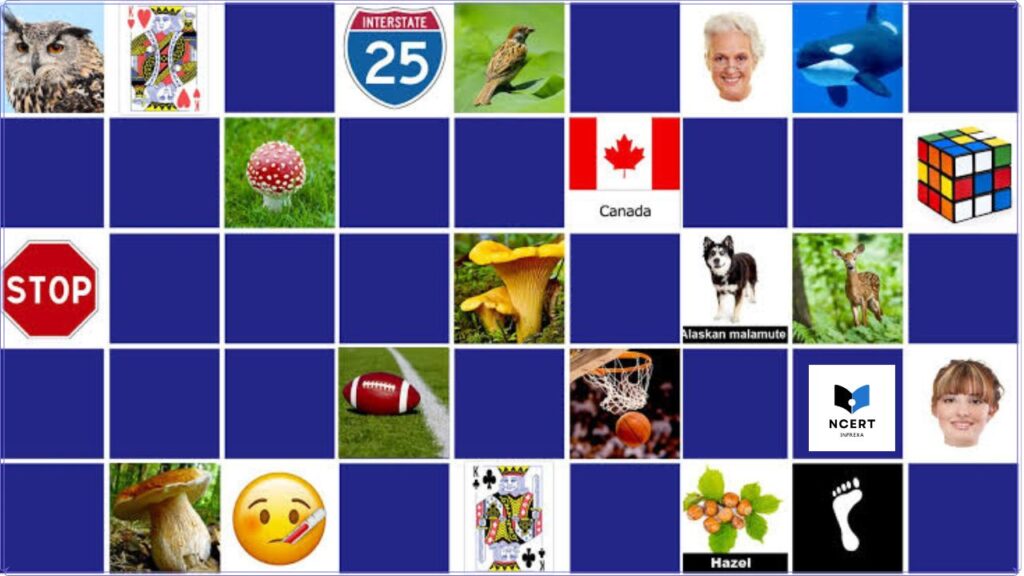
7. Pair Matching / Concentration (Memory-Based Matching)
Players flip two face-down cards or tiles per turn, trying to locate two identical images or symbols. This game tests pure visual and spatial memory, unlike other genres that test dexterity or planning. The challenge lies not in manipulating pieces, but in recalling the location of previously revealed items after they are flipped back over.
8. 2048 (Tile-Merging Puzzle)
2048 is a block-grouping game that demands mathematical strategy and foresight. Players swipe numbered tiles across a grid. When two tiles with the same number collide, they merge to form a single tile with the combined value (e.g., 2 and 2 merge to 4). The objective is to combine tiles until a single 2048 tile is created. Strategic players attempt to keep the highest-value tile in a single corner to prevent the board from becoming too cluttered too quickly.
Pro Tip: The ‘D-Pad’ strategy (only pressing Down and Right) is often insufficient for achieving the highest scores. To hit the 2048 and beyond tiles, you must use all four directions fluidly to manage and consolidate space, especially to keep your highest-value tile locked in one consistent corner.
The game is available on Mobile and Web. A version is available to play instantly on 2048Game.com. For a similar block-combining challenge that uses tetrominos and relies on adding values, try Threes!, which is the spiritual predecessor to 2048.
9. Collapse / Block Grouping (Match-2 Elimination)
Instead of swapping, players click on groups of two or more adjacent, identical blocks or shapes to eliminate them immediately. The unique mechanic here is the “collapse.” When a group is cleared, the blocks above fall down, and columns often shift horizontally. Strategic play involves creating large, high-scoring clusters and anticipating how the board will restructure after a move.
10. Jewel Academy (Arcade Match-3)
Similar to classic Match-3, but with an emphasis on collecting specific quantities of items or power-ups within a limited number of moves. This variant is typically optimized for quick, daily mobile play. Its challenge often comes from managing the board space and using collected magic or boosters (like bombs and hammers) to complete objectives when traditional swaps are unavailable.
Important Genre Questions Answered
Q: What is the key difference between Match-3 and Pair Matching?
Match-3 games require players to manipulate the game board by swapping pieces to create a match (e.g., Bejeweled). Pair Matching games require players to identify and select pre-existing pairs without manipulating the board layout (e.g., Mahjong Solitaire).
Q: Are these games completely free?
Most of the games listed operate on a free-to-play (F2P) model. This means the core game is free, but they often include optional advertisements, limited lives/energy, and in-app purchases for power-ups or cosmetic items.
Q: Which subgenre requires the most long-term planning?
Mahjong Solitaire and 2048 require the most foresight. Mahjong Solitaire demands careful selection to ensure tiles underneath remain unblocked, while 2048 requires complex planning to guide the high-value tiles to a consistent corner.
Q: Where can I play these games?
All these games are widely available. Match-3 titles dominate the mobile app stores (iOS/Android). Classic games like Mahjong and Bubble Shooter are often available for free directly in a web browser.